
Bitcoin Deposits and Withdrawals for Horse Racing Betting
 Available in US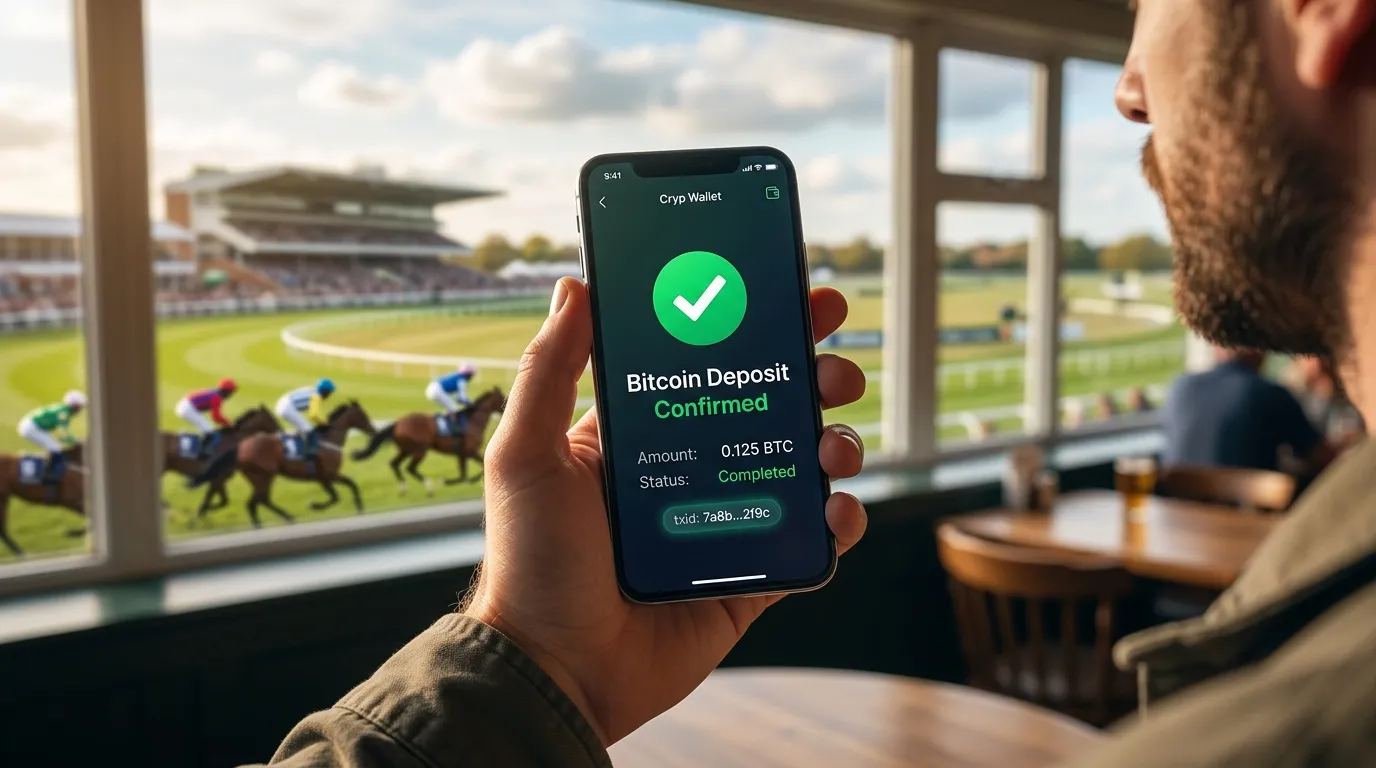
The first time I withdrew a substantial win in Bitcoin, the entire amount landed in my wallet while I was still making coffee. Twenty minutes from request to confirmation. Compare that to the five days I once waited for a traditional bookmaker to process a bank transfer – after they’d asked for additional identification documents twice – and you’ll understand why crypto has fundamentally changed how I manage betting funds.
Speed isn’t just convenience. In horse racing, timing affects everything from catching early prices to having funds available for the next race. Bitcoin transactions typically confirm within 10-40 minutes depending on network conditions. Traditional withdrawals stretch to 1-5 business days assuming nothing goes wrong. That difference compounds across a season of active betting into something genuinely meaningful.
But the mechanics of moving Bitcoin in and out of sportsbooks aren’t obvious if you’re coming from traditional betting. Wallet addresses, network fees, confirmation requirements – these concepts need demystifying before you start transacting significant amounts. What follows is the practical guide I wish I’d had when making that first deposit.
Table of Contents
- How to Deposit Bitcoin for Horse Racing Bets
- Withdrawing Your Winnings in Bitcoin
- Transaction Fees Explained
- Crypto vs Traditional Payment Speed
- Beyond Bitcoin: Ethereum, Litecoin, and Stablecoins
- Keeping Your Transactions Secure
- Troubleshooting Common Issues
- Converting Winnings to GBP
- Bitcoin Transaction FAQs
How to Deposit Bitcoin for Horse Racing Bets
Moving Bitcoin to a sportsbook involves three distinct stages that each require attention. Rush through any of them and you risk delays, lost funds, or missing the race you wanted to bet on. The process feels intimidating the first few times but becomes second nature quickly. Here’s everything broken down properly.
Setting Up Your Wallet
Your sportsbook account will generate a deposit address, but you need somewhere to send from – a wallet you control. The choice matters more than most guides suggest. Using an exchange wallet (keeping Bitcoin on Coinbase or Binance, for example) works but adds an extra withdrawal step and potential delays. A dedicated software wallet gives you direct control.
For betting purposes, I recommend a “hot” wallet that stays connected to the internet. Mobile options like Trust Wallet or desktop applications like Electrum balance security with convenience. These let you initiate transactions quickly when you’ve spotted a price worth taking. The trade-off is accepting some security risk – funds in a hot wallet are more vulnerable to hacking than cold storage. Never keep more Bitcoin in your betting wallet than you’re actively using.
Some punters maintain a simple pipeline: exchange account for buying Bitcoin, hot wallet for betting transactions, cold storage for long-term holdings. This separation contains risk while maintaining operational flexibility.
Transferring Funds Step by Step
Every sportsbook handles deposits slightly differently, but the core process remains consistent. In your account’s banking or cashier section, select Bitcoin deposit. The platform generates a unique receiving address – a long string of alphanumeric characters – along with a QR code containing the same information.
Copy that address exactly. A single wrong character sends your Bitcoin somewhere else permanently, with no possibility of recovery. Most wallets let you scan the QR code directly, eliminating copy errors. If manually entering the address, triple-check before confirming. I’ve developed the habit of verifying the first four and last four characters even after scanning a QR code – paranoid perhaps, but Bitcoin transactions are irreversible.
Set your transaction amount in your wallet, review the network fee (more on this shortly), and confirm. The Bitcoin leaves your wallet immediately. Now you wait for the blockchain to confirm your transaction.
Understanding Confirmation Times
Bitcoin’s blockchain adds new blocks approximately every 10 minutes. Each block that builds on top of yours adds a “confirmation.” Most sportsbooks require 1-3 confirmations before crediting your account. At the low end, your deposit might appear within 10-15 minutes. When the network is congested or your fee was conservative, expect 30-40 minutes.
Racing creates specific timing pressures. If the 3:15 at Newmarket looks interesting and you don’t have funds available, you’re evaluating whether a deposit will arrive in time. My approach: always deposit ahead of betting sessions rather than reactively when a race catches your eye. Morning deposits before UK cards begin solve most timing problems.
Network congestion follows patterns. Major Bitcoin price movements trigger increased activity, slowing confirmations. Weekday business hours (US time) see more traffic than weekends. During calm periods, even minimum-fee transactions confirm within 20 minutes. During congestion spikes, those same transactions might wait hours.
Withdrawing Your Winnings in Bitcoin
Withdrawals should mirror deposits in simplicity but often introduce additional variables. Platforms that let you deposit instantly sometimes impose waiting periods, verification requirements, or manual review stages before releasing withdrawals. Understanding these before you win avoids unpleasant surprises. The asymmetry between easy deposits and complicated withdrawals represents one of the industry’s less attractive patterns.
The process begins in your wallet – your personal wallet, not the sportsbook’s. Generate a receiving address and copy it carefully. Some wallets create new addresses for each transaction for privacy reasons; others maintain a static address. Either works, but know which type yours uses. Back at the sportsbook, navigate to withdrawals, select Bitcoin, paste your address, and enter the amount. Some platforms let you withdraw your entire balance; others impose minimum and maximum limits per transaction.
Processing time splits into two phases: the platform’s internal approval and the blockchain confirmation. Well-run crypto sportsbooks approve withdrawals automatically for amounts under their thresholds – often within minutes. Larger withdrawals or accounts flagged for additional review might wait hours or require support interaction. First withdrawals sometimes trigger enhanced verification regardless of amount as platforms verify account ownership. Once approved and broadcast to the Bitcoin network, the same confirmation timing applies as deposits.
I’ve timed hundreds of withdrawals across major platforms. Bitcoin typically takes 10-40 minutes from request to spendable funds in my wallet. The variance comes almost entirely from platform processing rather than blockchain speed. Platforms processing within 5 minutes feel genuinely different from those taking 30 minutes to approve – the blockchain portion stays consistent. This is why platform choice matters as much as cryptocurrency choice for overall transaction experience.
Withdrawal limits deserve attention before you bet large amounts. Some platforms restrict daily or weekly withdrawal volumes, requiring multiple transactions to extract a significant win. Others impose cooling-off periods between withdrawal requests. Knowing these limits in advance shapes bet sizing and bankroll decisions. A platform that caps withdrawals at 1 BTC daily might work fine for recreational betting but creates problems for serious punters after a successful festival.
Transaction Fees Explained
Bitcoin transaction fees confuse newcomers because they work nothing like bank charges. There’s no fixed percentage or flat rate. Instead, you’re bidding for space in the next block, competing against every other transaction waiting to be processed.
Fees calculate based on transaction size in bytes (not Bitcoin amount) multiplied by the current rate per byte. A simple transaction sending from one address to one address costs less than a transaction consolidating multiple smaller inputs. The practical implication: making several small deposits creates more expensive withdrawal transactions later when you combine those funds.
Most wallets suggest fees based on current network conditions, offering tiers like “economy,” “normal,” and “priority.” Economy fees might cost a few pence but take hours to confirm. Priority fees cost more but typically confirm within the next block or two. For racing bets where timing matters, the premium for faster confirmation usually justifies itself – saving £2 on fees means nothing if you miss the price you wanted.
Platform-side fees vary significantly. Some sportsbooks cover withdrawal fees entirely, passing no cost to users. Others charge fixed fees regardless of withdrawal size, which disproportionately impacts smaller withdrawals. A few adjust fees based on network conditions, sometimes charging more during congestion periods. Before depositing significant amounts, verify withdrawal fee policies.
The counterintuitive reality: transaction fees matter less as betting volume increases. A £3 fee on a £50 withdrawal takes 6% of your funds. The same fee on a £500 withdrawal takes 0.6%. Consolidating betting activity into fewer, larger transactions reduces the proportional impact of fees.
Crypto vs Traditional Payment Speed
The comparison isn’t close, and it matters more than raw numbers suggest. Traditional bookmaker withdrawals depend on multiple parties: the operator’s payment team, your bank’s processing, potential fraud checks at either end, and business day limitations. Each handoff introduces delay and the possibility of unexpected holds.
| Payment Method | Typical Deposit Time | Typical Withdrawal Time | Weekend Processing |
|---|---|---|---|
| Bitcoin | 10-40 minutes | 10-40 minutes | Yes (24/7) |
| Litecoin | 2.5-10 minutes | 2.5-10 minutes | Yes (24/7) |
| Debit Card | Instant | 1-5 business days | No |
| Bank Transfer | 1-3 business days | 1-5 business days | No |
| PayPal/E-wallets | Instant-24 hours | 24-72 hours | Limited |
Weekend racing illustrates the difference sharply. Win at Cheltenham on a Saturday, request a crypto withdrawal, and the funds reach your wallet before you’ve left the course. With traditional banking, that same withdrawal might not arrive until Wednesday or Thursday. If you planned to use those winnings for Sunday’s racing, crypto provides continuity that bank payments can’t match.
The reliability dimension matters too. Bitcoin transactions either confirm or they don’t – there’s no mysterious “processing” status that stretches for days without explanation. Traditional payment delays often lack clear causation, leaving you wondering whether something went wrong or things just take this long. Blockchain transparency lets you track exactly where your transaction sits in confirmation progress.
Beyond Bitcoin: Ethereum, Litecoin, and Stablecoins
Bitcoin dominates crypto betting by reputation, but it’s not always the smartest choice for racing transactions. Stablecoins are projected to account for over 70% of all crypto wagers by 2026, and that shift reflects practical advantages that serious bettors have recognised. Meanwhile, Bitcoin’s share of crypto gambling has dropped from 88% to 77% in 2025 alone.
Litecoin deserves more attention than it receives. Transactions confirm in roughly 2.5 minutes with minimal fees – a fraction of Bitcoin’s typical timing. For racing where you might need funds available quickly, that speed difference translates directly into opportunity. The 15-minute window between spotting a price and the race going off becomes comfortable rather than stressful when your deposit confirms in under 5 minutes.
Ethereum offers different advantages. Transaction speeds vary more than Litecoin depending on network conditions and gas fees, but the ecosystem integration matters. If you’re already active in DeFi or hold ETH for other purposes, using the same asset for betting simplifies portfolio management. Gas fees can spike unpredictably though – I’ve seen simple transfers cost £20+ during congestion events that would have been pennies on Litecoin.
Stablecoins like USDT and USDC eliminate the volatility problem entirely. Samara Cohen at BlackRock noted that stablecoins “are no longer niche and are becoming the bridge between traditional finance and digital liquidity.” For betting purposes, this means your bankroll doesn’t fluctuate based on crypto market movements. A £500 balance stays worth approximately £500 regardless of what Bitcoin does overnight. The psychological benefit shouldn’t be underestimated – separating betting performance from crypto market performance lets you evaluate your actual results clearly.
Platform support varies by cryptocurrency. Most major sportsbooks accept Bitcoin, Ethereum, and Litecoin. Stablecoin support is increasingly common but not universal. Before committing to a particular coin for your betting activity, verify your preferred platforms accept it for both deposits and withdrawals.
Keeping Your Transactions Secure
A colleague lost £3,000 in Bitcoin to a phishing site that perfectly mimicked his sportsbook’s login page. The domain differed by one character. He’d clicked a link from a promotional email that wasn’t actually from the platform. By the time he realised, his balance had been withdrawn to an unknown address. That story has shaped every security habit I maintain.
Bookmark your sportsbook’s genuine URL and only access it through that bookmark. Never click login links from emails regardless of how legitimate they appear. This single habit prevents most phishing attacks. Browser extensions that flag suspicious domains add another layer but shouldn’t replace basic caution.
Enable two-factor authentication on every account – sportsbook, wallet, email, exchange. SMS-based 2FA is better than nothing, but authenticator apps like Google Authenticator or Authy provide stronger protection. Hardware security keys offer the best protection for high-value accounts, though they’re overkill for most betting activity.
Address verification before every transaction sounds tedious until you consider the alternative. When withdrawing, paste your receiving address, then verify the first four and last four characters against your wallet. Clipboard malware exists specifically to swap cryptocurrency addresses – your copied address gets replaced with the attacker’s address without visible indication. The few seconds of verification potentially save your entire withdrawal.
Consider your physical security too. Public WiFi networks expose transaction data to interception. If you must bet from public locations, use a VPN. Better yet, restrict sensitive transactions to trusted networks. Mobile data from your phone carrier provides more security than café WiFi for quick betting sessions.
Seed phrase protection ultimately determines whether you can recover from device loss or theft. Write it down on paper, store it securely offline, never photograph it or store it digitally. If someone obtains your seed phrase, they control your funds. No amount of other security measures compensates for compromised seed phrase storage.
Troubleshooting Common Issues
Transactions stuck in “pending” status cause the most anxiety among crypto bettors. Understanding why this happens and what you can actually do about it prevents panic decisions that sometimes make things worse.
Unconfirmed transactions usually result from insufficient fees. During network congestion, miners prioritise higher-fee transactions. Your low-fee deposit sits in the mempool waiting for quieter conditions. Most wallets offer “replace by fee” functionality – you can broadcast the same transaction with a higher fee, effectively jumping the queue. The original low-fee transaction becomes invalid once the higher-fee replacement confirms.
If your transaction shows confirmed on a block explorer but hasn’t credited to your sportsbook account, the issue is platform-side. Some sportsbooks require more confirmations than others – your deposit might need 3 confirmations while you’re checking after just 1. Contact support with your transaction ID (the long string identifying your specific transaction on the blockchain) and the exact amount sent. Legitimate platforms resolve these discrepancies once provided clear documentation.
Wrong network errors happen more than they should. Sending Bitcoin to a Bitcoin Cash address, or ERC-20 tokens to a BEP-20 address, typically results in permanent loss. The addresses look similar but represent incompatible networks. Before any transaction, verify you’re sending on the correct network. If the platform specifies “BTC (Bitcoin Network),” don’t send from a wallet configured for a different Bitcoin variant.
Amount mismatches occur when you send slightly less than intended – perhaps due to fee deduction settings in your wallet. Some platforms reject deposits below their minimum threshold, leaving funds in limbo until manually resolved. Always verify the amount actually sent matches what the platform expects. When in doubt, send slightly more than required rather than hitting the exact minimum.
Platform-side maintenance occasionally delays both deposits and withdrawals. Crypto sportsbooks don’t always announce maintenance windows clearly. If transactions seem stuck without explanation and the blockchain shows no issues, check the platform’s social media or status page before assuming something’s wrong with your transaction.
Converting Winnings to GBP
Getting Bitcoin out of a sportsbook is straightforward. Turning that Bitcoin into pounds sitting in your bank account involves additional steps and decisions that affect how much value you ultimately retain.
The simplest path runs through a UK-regulated exchange. Platforms like Coinbase and Kraken operate with FCA registration, meaning they can connect to UK bank accounts for GBP withdrawals. The process: withdraw from sportsbook to your personal wallet, transfer from wallet to exchange, sell Bitcoin for GBP, withdraw GBP to your bank. Each step takes time and potentially incurs fees.
Exchange selection affects both speed and cost. Trading fees range from 0.1% to 1.5% depending on platform and volume tier. Withdrawal fees to UK banks vary similarly. A large win might justify shopping for the cheapest conversion route; routine smaller conversions don’t warrant extensive comparison shopping given the time involved.
Timing your conversion introduces strategic considerations. If Bitcoin’s price is particularly depressed when you want to convert, waiting for recovery preserves more value – but also exposes you to further decline risk. Conversely, converting during price spikes captures gains but means holding GBP that can’t benefit from further appreciation. There’s no objectively correct answer. Some bettors convert winnings immediately to maintain clear P&L tracking. Others hold Bitcoin indefinitely, treating it as both betting medium and investment.
The stablecoin alternative sidesteps conversion timing entirely. If you bet with USDT rather than Bitcoin, your winnings hold stable dollar value. Converting USDT to GBP involves only currency exchange risk, not crypto volatility. For punters who want to separate betting performance from crypto market performance, this approach clarifies actual results.
Tax implications deserve awareness even though betting winnings themselves aren’t taxed in the UK. Cryptocurrency disposal – including selling Bitcoin for GBP – can trigger capital gains obligations if your gains exceed the annual allowance. The interaction between betting activity and crypto trading creates complexity best discussed with a qualified accountant if significant amounts are involved.
Bitcoin Transaction FAQs
What is the minimum Bitcoin deposit for horse racing betting?
Minimum deposits vary by platform, typically ranging from 0.0001 BTC to 0.001 BTC (roughly £5-50 depending on Bitcoin price). However, practical minimums are higher when accounting for network fees – depositing £10 worth of Bitcoin while paying £3 in fees doesn’t make sense. Most punters find £50+ deposits provide reasonable fee-to-value ratios.
How long do Bitcoin withdrawals take from betting sites?
Total withdrawal time combines platform processing and blockchain confirmation. Well-optimised platforms approve withdrawals within 5-15 minutes; slower ones might take an hour or more for manual review. Blockchain confirmation adds 10-40 minutes depending on network conditions and fee levels. End-to-end, expect 15 minutes to an hour for most withdrawals.
Can I deposit Bitcoin and withdraw in a different cryptocurrency?
Most multi-currency crypto sportsbooks allow this flexibility. You might deposit Bitcoin when that’s what you’re holding, then withdraw in Litecoin for faster confirmation or USDT to avoid price volatility. The platform handles internal conversion, though exchange rates may include spread. Check whether withdrawal-currency flexibility comes with any additional fees or restrictions.
Are there limits on crypto withdrawals from sportsbooks?
Yes, virtually all platforms impose limits. Daily limits commonly range from 1-10 BTC equivalent. Weekly and monthly limits may apply additional caps. VIP programmes typically raise these limits for active bettors. Before depositing large amounts, verify the withdrawal limits won’t create problems extracting potential wins. A platform that lets you deposit unlimited amounts but restricts withdrawals creates obvious issues.
Written by the editors at Horse Racing Betting Crypto.