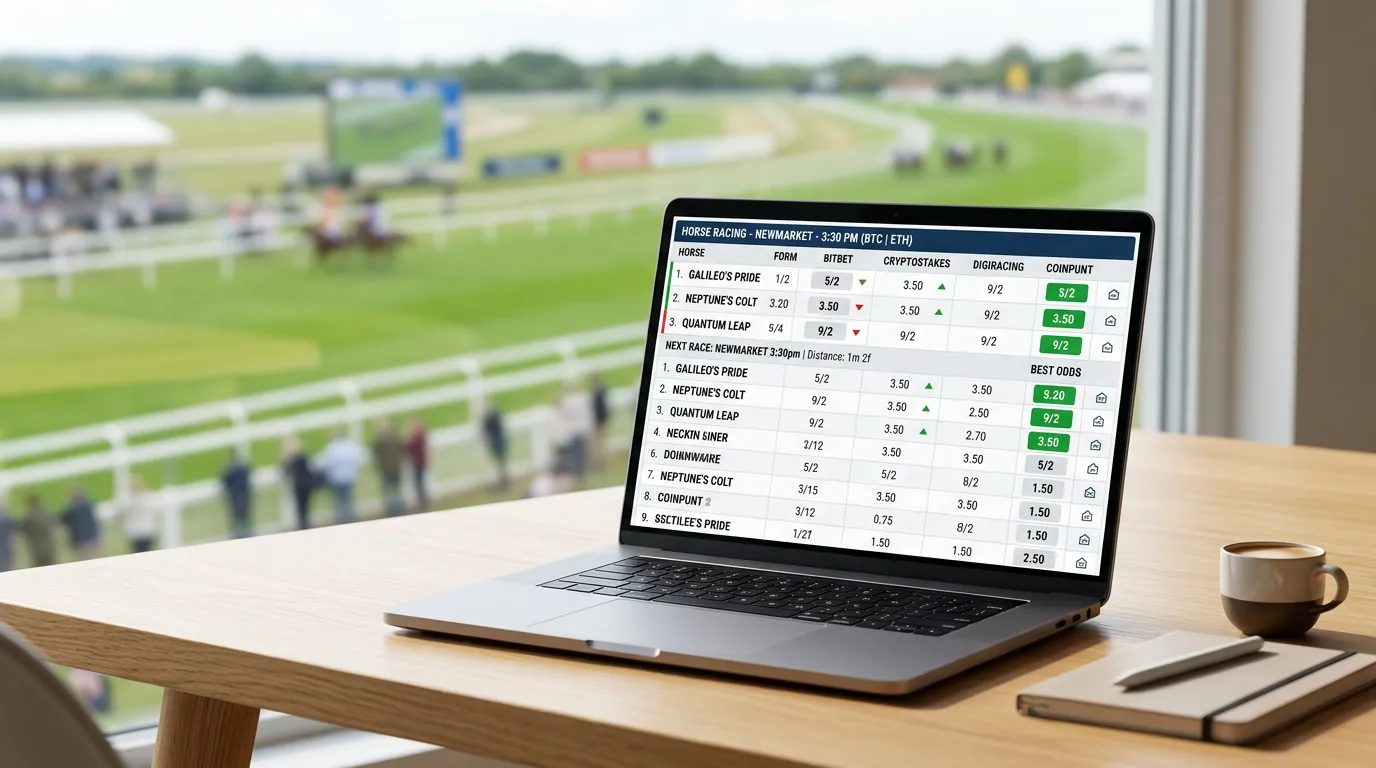
Traditional vs Crypto Bookmakers: Horse Racing Comparison
 Available in US
My first account restriction arrived two weeks after backing a 33/1 winner at a household-name bookmaker. Maximum stakes dropped from £500 to £4.72 overnight – not a typo, that specific odd amount. The experience illuminated something fundamental about traditional bookmaking that crypto alternatives approach entirely differently. Understanding these structural differences helps you choose platforms aligned with your betting approach.
The UK gambling industry generated £16.8 billion in gross gaming yield through March 2025, growing 7.3% year-on-year. Within this market, the remote sector – online betting including both traditional and crypto platforms – contributed £7.8 billion, representing 46% of the total. This scale provides context for comparing established operators against crypto challengers.
UK Betting Market Context
Traditional UK bookmakers operate within one of the world’s most heavily regulated gambling environments. The Gambling Commission oversees licensing, advertising, customer protection, and operational standards. This regulatory framework provides consumer protections unavailable elsewhere – but also creates costs that operators pass to customers through reduced odds and restricted accounts.
The high-street heritage of major UK bookmakers shapes their culture and operations. These businesses evolved from physical betting shops where relationships mattered and winners were tolerated as the cost of maintaining recreational customer flow. Online operations inherited this legacy unevenly – the brand recognition but not always the tolerance for winning customers.
Crypto sportsbooks typically operate under offshore licensing – Curaçao, Malta, or similar jurisdictions with lighter regulatory requirements. This positioning provides operational flexibility but removes UK-specific protections. The trade-off isn’t categorically better or worse; it suits different bettor priorities.
Market competition intensity differs between sectors. Traditional UK bookmakers compete primarily through marketing spend, brand positioning, and promotional offers. Crypto platforms compete more on product features, odds quality, and transaction efficiency. These different competitive focuses produce noticeably different customer experiences.
Odds and Margins Compared
Margin structures fundamentally differ between traditional and crypto bookmakers. UK-licensed operators face tax obligations, regulatory compliance costs, and substantial marketing expenditure that crypto alternatives largely avoid. These cost differences theoretically enable better odds at crypto platforms – though translation to customer benefit varies.
Traditional bookmakers typically operate racing markets at 110-115% total book. A four-horse race might be priced at odds implying 112% probability – the 12% excess representing the bookmaker’s margin. Over time, this margin systematically transfers value from bettors to operators.
Crypto sportsbooks often operate tighter margins – 105-108% on comparable markets. The difference sounds modest until compounded across hundreds of bets. A regular punter placing 50 bets monthly saves meaningfully through reduced margin extraction, even before considering individual price advantages on specific selections.
Best odds guaranteed policies at traditional bookmakers provide protection against adverse price movements. If starting price exceeds your taken price, you receive the better odds. Most crypto platforms don’t offer this protection, creating situations where early prices prove disadvantageous against late market movements.
Promotional pricing distorts comparison during specific events. Traditional bookmakers often offer enhanced odds on major races – the Grand National favourite at boosted prices, for instance. These promotional prices temporarily exceed crypto alternatives, though the offers typically carry restrictions limiting their value.
Deposits and Withdrawals
Transaction speed and friction represent perhaps the starkest difference between traditional and crypto betting. This operational contrast affects practical betting experience more than odds comparison for many users.
Traditional bookmaker deposits via debit card process instantly during normal hours. Withdrawals take 1-5 business days depending on operator and payment method. Bank transfers sit at the slower end; e-wallet withdrawals prove somewhat faster. Weekend and holiday timing extends these windows unpredictably.
Crypto deposits confirm based on network speed – minutes for most transactions, occasionally longer during network congestion. Withdrawals process equally quickly, often arriving in wallets within an hour of request. This speed differential transforms how you can manage betting bankroll across platforms and events.
Verification requirements differ significantly. UK bookmakers require identity verification for all customers, with enhanced checks at higher transaction levels. Many crypto platforms operate with minimal or no verification for typical transaction volumes. The privacy implications cut both ways – less friction but also less protection if disputes arise.
The British Horseracing Authority noted that the government’s decision to maintain the 15% online betting tax rate avoided the worst scenario for racing’s funding structure. This tax burden contributes to the cost differential between UK-licensed and offshore operators, ultimately affecting the odds and terms available to customers.
Customer Protections
Protection frameworks differ fundamentally between regulated UK operators and offshore crypto platforms. Understanding exactly what you gain and lose with each choice enables informed platform selection aligned with your priorities and risk tolerance.
UK-licensed bookmakers must segregate customer funds, protecting balances if the operator becomes insolvent. This protection proved valuable during previous operator failures – customers recovered funds that would have been lost without regulatory requirements. Crypto platforms offer no equivalent guarantee; funds held on platform depend entirely on operator solvency and honesty.
Dispute resolution through the Gambling Commission provides recourse when disagreements arise with UK bookmakers. An independent body evaluates complaints and can compel operators to address legitimate grievances. Disputes with offshore crypto platforms have no equivalent escalation path – you’re reliant on operator goodwill and community reputation pressure.
Self-exclusion schemes allow problem gamblers to block themselves from UK-licensed operators. GAMSTOP registration prevents access across all participating bookmakers, providing meaningful protection for those struggling with gambling control. Offshore crypto platforms don’t participate in these schemes – a feature or a bug depending on individual circumstances and perspective.
Account restrictions represent a protection that benefits operators more than customers. UK bookmakers routinely restrict winning accounts, limiting stakes to trivial amounts or closing accounts entirely. Crypto platforms generally can’t identify individual bettors across accounts, making such restrictions impractical to implement effectively. For successful punters, this difference proves enormously significant to long-term profitability.
Responsible gambling tools vary in implementation quality across both sectors. UK regulation mandates deposit limits, reality checks, and cooling-off periods from all licensed operators. Crypto platforms may offer similar tools voluntarily but face no requirement to do so. Those requiring these protective features should verify availability before using platforms where implementation remains optional rather than mandated.
Data protection falls under different regimes. UK operators must comply with GDPR and domestic data protection requirements. Offshore platforms may or may not provide equivalent protection depending on their jurisdiction and policies. Your personal and financial information receives different treatment depending on platform choice.
Are crypto sportsbook odds consistently better?
Generally yes for margins, but not universally for individual prices. Crypto platforms typically operate at 105-108% total book versus 110-115% at traditional UK bookmakers. However, promotional pricing, best odds guaranteed policies, and individual race pricing can favour traditional operators in specific situations. Comparing odds on your intended bets rather than assuming categorical superiority produces better outcomes.
What protections do I lose using offshore crypto sites?
Key losses include: fund segregation guaranteeing balance recovery if the operator fails; Gambling Commission dispute resolution for complaint escalation; GAMSTOP self-exclusion scheme participation; and mandatory responsible gambling tool implementation. You gain freedom from account restrictions and typically better core odds – but this trade-off requires accepting increased platform risk.
Prepared by the Horse Racing Betting Crypto editorial staff.