USDT Horse Racing Betting: Stablecoin Advantage Explained
 Available in US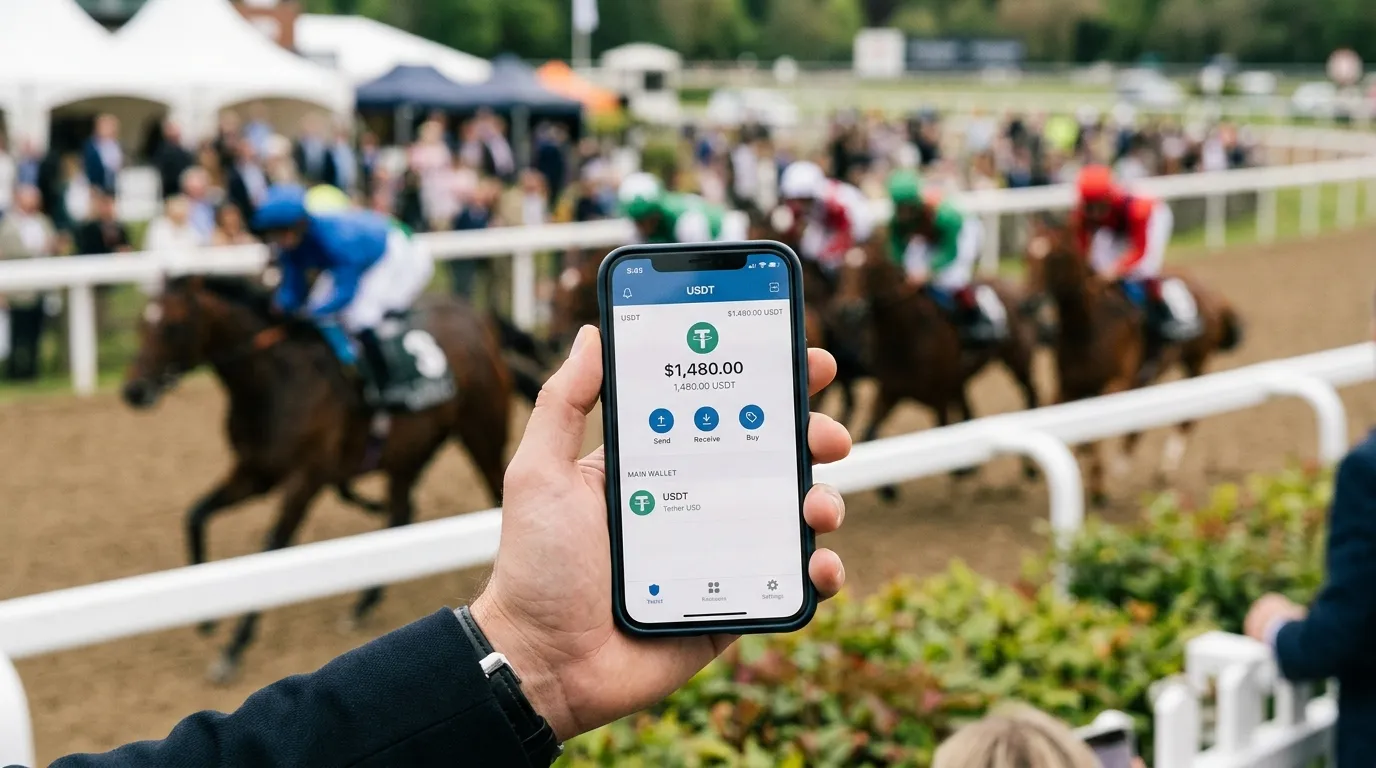
The morning I lost £400 on a winning bet taught me everything about cryptocurrency volatility. My horse won at 8/1, the sportsbook credited my account immediately, but Bitcoin dropped 6% while I slept. By the time I withdrew, my “profit” had evaporated into the ether. That experience converted me to stablecoin betting – and I haven’t looked back since.
Stablecoins will constitute over 70% of all crypto wagers by 2026, and this shift reflects hard-won lessons from early adopters. USDT – Tether – dominates this transition, offering the transactional benefits of cryptocurrency without the stomach-churning price swings that can turn winners into losers overnight. For horse racing specifically, where betting windows span days or weeks during major festivals, stablecoin stability transforms bankroll management entirely.
What Makes USDT Different
USDT maintains a 1:1 peg with the US dollar through reserve backing. When you hold USDT, you hold something designed to equal one dollar – not something that might equal one dollar depending on market sentiment. This fundamental difference changes how crypto betting functions at every level.
The technical mechanism matters less than the practical outcome: your betting bankroll holds its value between deposit and withdrawal. Place a £500 equivalent bet on Monday, win at 5/1 on Saturday, withdraw on Sunday – and your £3,000 withdrawal actually equals £3,000. No checking exchange rates, no calculating whether your profit survived market movements, no converting back through volatile intermediaries.
Transaction speed remains comparable to Bitcoin and Ethereum. USDT operates across multiple blockchains – primarily Ethereum and Tron – with confirmation times ranging from seconds to minutes depending on network choice. Most crypto sportsbooks accept USDT on both networks, allowing you to optimise for speed or cost depending on circumstances.
Fees present a mixed picture. Ethereum-based USDT transactions carry gas costs that fluctuate with network congestion – sometimes negligible, occasionally eye-watering during peak periods. Tron-based USDT typically costs fractions of a penny per transaction regardless of amount. Understanding which network your chosen platform supports, and which your wallet defaults to, prevents unpleasant surprises.
Samara Cohen at BlackRock captured the broader shift perfectly: stablecoins are no longer niche instruments but bridges between traditional finance and digital liquidity. For betting purposes, this bridge allows you to maintain crypto’s transactional advantages while thinking in familiar currency terms.
Protecting Your Bankroll from Volatility
Volatility protection sounds abstract until you’ve experienced the alternative. Bitcoin’s 2024 range spanned from £32,000 to £58,000 – a spread that makes any serious bankroll calculation essentially meaningless. How do you manage a 5% betting bankroll when the bankroll itself might swing 20% in a week?
USDT eliminates this variable entirely. Your £1,000 betting fund remains a £1,000 betting fund whether markets rise, fall, or move sideways. Position sizing calculations that assume stable bankroll values actually work. Kelly criterion applications that depend on accurate bankroll measurement produce meaningful outputs rather than mathematical fiction.
The stability particularly matters during ante-post campaigns. Cheltenham positions taken in January shouldn’t depend on February’s crypto market sentiment for their profitability. A 20/1 winner should deliver 20 times your stake, not 20 times a stake that has itself halved through currency movement.
Hedging strategies become possible when your betting currency behaves predictably. Laying positions on exchanges, taking opposing views across bookmakers, adjusting exposure as information changes – all these techniques assume you can calculate position values accurately. USDT provides that calculation foundation.
The psychological benefit deserves mention alongside the mathematical. Checking crypto prices constantly, worrying about overnight movements, second-guessing withdrawal timing – these behaviours consume mental energy that could focus on actual betting analysis. Stablecoin betting removes an entire category of decision-making from your process.
Platforms Supporting USDT for Racing
Not every crypto sportsbook treats USDT equally. Some platforms accept it with full feature parity to Bitcoin – identical limits, instant crediting, unrestricted withdrawal. Others relegate stablecoins to secondary status with lower limits or slower processing. Verifying your chosen platform’s USDT support before committing funds prevents frustration.
Deposit limits vary more for USDT than volatile cryptocurrencies at some platforms. This reflects risk management on the sportsbook’s side – a £50,000 Bitcoin deposit might become £45,000 before the bettor acts, providing natural downside protection for the operator. USDT deposits hold their value, shifting this risk entirely to the platform. Check maximum deposit and withdrawal limits specifically for USDT rather than assuming parity with Bitcoin.
Racing coverage quality doesn’t correlate perfectly with USDT support. Some platforms with excellent UK racing depth restrict stablecoin options, while others offering comprehensive USDT functionality provide limited racing markets. Balancing these factors requires evaluating your priorities – perfect stablecoin experience with decent racing, or optimal racing coverage with adequate stablecoin support.
Bonus terms sometimes differ for stablecoin deposits. Welcome offers structured around percentage matches may calculate differently for USDT than Bitcoin, or exclude stablecoins entirely from promotional eligibility. Reading terms specifically for your intended deposit currency avoids disappointment when expected bonuses fail to materialise.
Network selection at deposit matters for platform compatibility. If your wallet defaults to Ethereum but your sportsbook only accepts Tron-based USDT, your transaction won’t complete – and recovering funds sent to incompatible addresses ranges from difficult to impossible. Double-check network requirements before every deposit.
Converting Between USDT and GBP
The GBP/USD exchange rate introduces the only meaningful volatility when betting with USDT. Your stablecoin maintains dollar parity, but pounds fluctuate against dollars. This exposure proves far more manageable than cryptocurrency volatility – typically single-digit percentages annually rather than weekly.
Conversion approaches divide between exchange-based and peer-to-peer methods. Centralised exchanges like those familiar to crypto users offer USDT/GBP pairs with competitive spreads during liquid trading hours. The conversion happens quickly, fees remain reasonable, and the process resembles any other crypto transaction.
Peer-to-peer platforms allow direct trading with other users, sometimes offering better rates than exchange order books. The trade-off involves counterparty risk and slower settlement – acceptable for large conversions planned in advance, less suitable for rapid movements.
Timing conversions around currency movements requires following GBP/USD rates with similar attention to betting markets. Sharp punters treat conversion timing as another edge to exploit – converting when sterling strengthens, holding USDT when sterling weakens. This approach adds complexity but can meaningfully impact annual returns.
Tax implications of conversion depend on individual circumstances and current HMRC guidance. Each conversion potentially constitutes a taxable event, though the stable nature of USDT means gains or losses typically stem from currency movement rather than cryptocurrency appreciation. Professional advice suits anyone betting at scale.
Direct GBP stablecoin alternatives exist but lack USDT’s liquidity and platform acceptance. GBPT and similar pound-pegged tokens eliminate exchange rate exposure entirely but restrict platform choice severely. The trade-off rarely favours these alternatives for most bettors.
Is USDT safer than Bitcoin for betting?
For bankroll stability, yes. USDT maintains dollar parity, eliminating the volatility that can turn profitable bets into losses through currency movement. However, USDT carries different risks – primarily concerns about reserve backing and regulatory uncertainty. For betting purposes, the stability advantage typically outweighs these concerns.
Which platforms offer the best USDT deposit bonuses?
Bonus structures vary significantly and change frequently. Some platforms offer identical bonuses regardless of deposit currency, while others provide enhanced terms for volatile cryptocurrencies to offset their risk. Check current promotions directly on each platform, specifically verifying USDT eligibility in bonus terms before depositing.
Created by the ”Horse Racing Betting Crypto” editorial team.